Your Ultimate Guide to Healthy, Glowing Skin – Expert Tips, Honest Reviews & Skincare Secrets!

Getting super glue on your skin is a common mishap that happens to DIY enthusiasts, crafters, and anyone working with adhesives. While it may seem alarming when that strong bond forms instantly on your fingers, the good news is that super glue can be safely removed from skin without causing damage.
This guide is for anyone who’s found themselves stuck with super glue on their hands, fingernails, or even in their hair. We’ll walk you through quick and safe removal methods using common household items, plus share effective techniques for getting super glue off fingernails and out of hair without resorting to scissors. You’ll also learn simple prevention tips to help you avoid these sticky situations in the future.
The most accessible and gentle method for removing super glue from skin involves using common household items you likely already have. Start by adding liquid soap to warm water in a container, creating a soapy solution that will help break down the adhesive bond. Soak the affected skin area in this warm, soapy water for several minutes to allow the solution to penetrate and loosen the glue.
Once the skin has been adequately soaked, gently rub the area in a circular motion to work the soapy water under the glue. This process helps further weaken the bond between the super glue and your skin. After sufficient loosening, carefully peel off the glue slowly, similar to removing a bandage. You may need to repeat this soaking and peeling process several times until all traces of the glue are completely removed.
For individuals with sensitive skin who need a gentler alternative to soap, lemon juice provides an effective natural solution. Mix equal parts lemon juice and water (1-part lemon juice to 1-part water) to create a mild acidic solution that can help break down the super glue without causing harsh irritation to delicate skin.
This natural alternative works by using the citric acid in lemon juice to gradually dissolve the cyanoacrylate bonds in super glue. Apply the lemon juice mixture to the affected area and allow it to work for several minutes before attempting to remove the softened glue. This method is particularly beneficial for those who experience skin sensitivity or allergic reactions to stronger cleaning products.
Natural oils offer another effective approach for super glue removal by utilizing their ability to break down adhesive bonds. Both margarine and olive oil contain fats that react chemically with the super glue, causing it to lose its strong hold on the skin. These household items are particularly useful because they’re gentle and readily available in most kitchens.
To use this method, apply a small amount of margarine or olive oil directly to the glued area. Massage the oil into the affected skin and allow it to soak for several minutes, giving the fats time to penetrate and weaken the adhesive bond. The grease will gradually work to loosen the glue’s grip, making it easier to gently roll or peel away the softened adhesive. After successful removal, wash the area thoroughly with soap and warm water to remove any remaining oil residue.
When dealing with particularly stubborn super glue that resists other removal methods, a laundry detergent solution provides additional cleaning power. Mix approximately ¼ cup of any brand of laundry detergent in a coffee cup of warm water to create a concentrated cleaning solution specifically designed to break tough bonds.
Apply this detergent mixture directly to the affected skin and rub gently for roughly 20 seconds, or continue until the glue begins to come off. The powerful cleaning agents in laundry detergent are formulated to break down various substances, making them effective against hardened super glue. This method works well for glue that has been on the skin for an extended period or has formed a particularly strong bond. After the glue removal is complete, rinse the area thoroughly with clean water to remove all detergent residue and prevent any potential skin irritation.
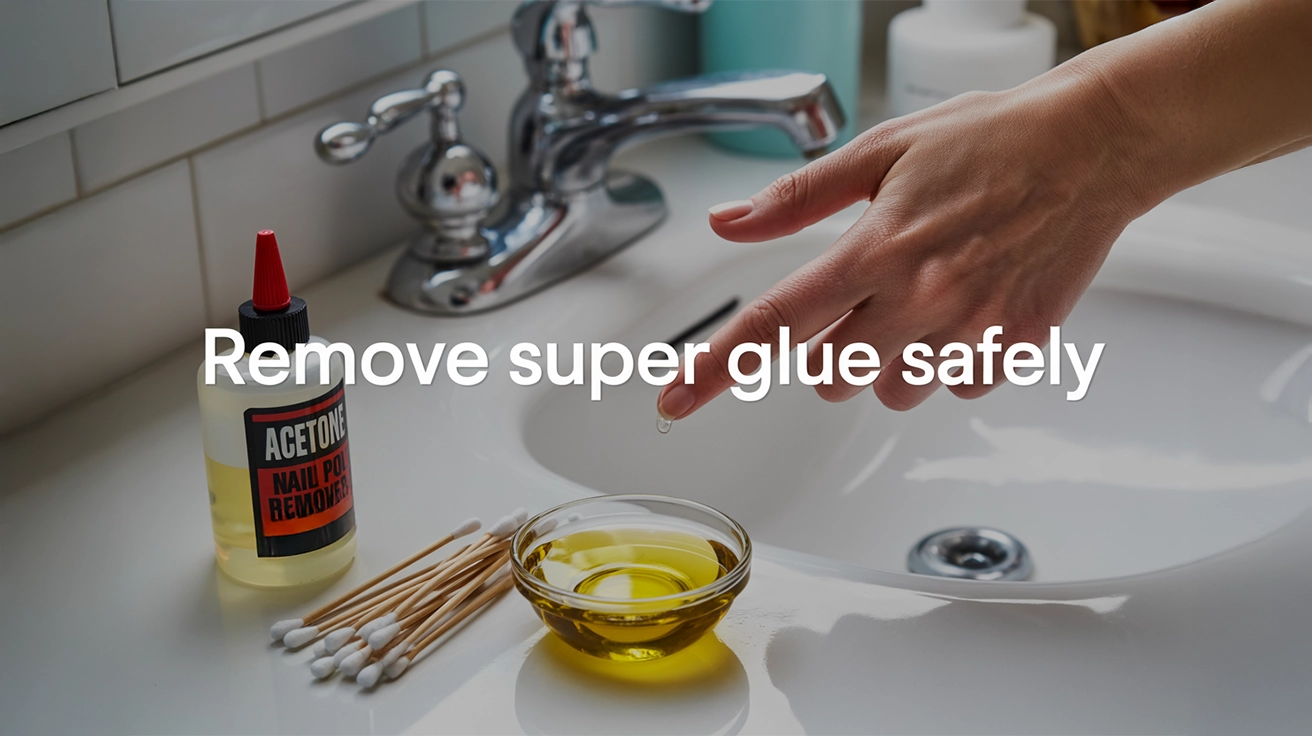
When super glue hardens on your fingernails, acetone becomes your most powerful ally in the removal process. As a potent solvent, acetone effectively breaks down super glue, making it significantly easier to remove from nail surfaces. You’ll find acetone in pure form or as the active ingredient in most nail polish removers, both of which work excellently for this purpose.
To begin the removal process, gather your supplies including pure acetone or acetone-based nail polish remover, cotton balls or pads, and a small bowl. Soak the cotton ball or pad thoroughly in acetone, ensuring it’s saturated but not excessively dripping. This saturation level allows for maximum effectiveness while maintaining control during application.
Before applying acetone to your nails, it’s crucial to understand that acetone can be harsh on both skin and nails. While the reference content emphasizes the importance of careful handling, protecting the delicate skin around your nails becomes essential for preventing unnecessary irritation or dryness during the removal process.
Once your cotton is properly saturated with acetone, gently press the soaked cotton directly onto the super glue covering your fingernails. Ensure complete coverage of the affected area for optimal results. Allow the acetone to sit for approximately 10-15 minutes, giving it adequate time to dissolve the super glue bonds.
After the waiting period, gently wipe the area with the cotton ball. You should observe the glue beginning to soften and come away from the nail surface. The dissolving action makes the previously stubborn adhesive manageable and removable without excessive force.
For complete removal, especially in areas where cotton balls might be too large or cumbersome, consider using more precise application methods. The acetone treatment process remains consistent regardless of the application tool, requiring patience and gentle persistence to achieve the best results.
After successfully removing the super glue, immediately wash your hands thoroughly with soap and water. Since acetone can dry out your skin, follow up with a good moisturizer to restore hydration and prevent irritation.
Once you’ve successfully softened and removed the super glue from your hair using acetone or nail polish remover, it’s crucial to wash your hair thoroughly with both shampoo and conditioner. This step is essential because the acetone or nail polish remover chemicals will dry out your scalp and hair, potentially causing damage if left untreated. The shampoo will help eliminate any remaining chemical residue from the removal process, while the conditioner works to restore moisture and protect your hair from the drying effects of the acetone treatment.
After applying acetone or nail polish remover to soften the super glue, you’ll need to work methodically to separate the adhesive from your hair strands. As the glue begins to loosen from the chemical treatment, gently pull it away from your head along the strands of hair toward the ends. For glue located at the tips of your hair, pull the affected strands taut and carefully work through the softened adhesive. The chemical treatment will cause the glue to gradually slide off your hair as it continues to soften and break down.
The removal process requires patience and a delicate touch to prevent unnecessary hair damage. When the super glue is positioned near your scalp or hairline, saturate a cotton ball with acetone and press it against the affected area, allowing the chemical to soak into the glue thoroughly. For smaller patches closer to the hair tips, use cotton swabs for more precise application. Always pull hair strands taut when working with cotton swabs, but avoid excessive force that could cause breakage or scalp irritation.
For stubborn super glue situations, acetone or nail polish remover remains your most effective solution. When dealing with glue near the scalp, try placing a piece of cardboard or wax paper between the glue and your skin to minimize direct acetone contact with your scalp. For glue at hair ends, thread the affected hair through a cotton ball soaked in acetone, allowing it to surround the glue clump for several minutes. This method often removes the adhesive completely as the chemicals work to soften it. Repeat the acetone application as necessary until all traces of super glue are eliminated, always following up with thorough shampooing and conditioning.
Proper application tools are essential for preventing super glue accidents. Rather than working directly from the original tube or bottle, transfer small amounts of adhesive to controlled applicators like toothpicks, cotton swabs, or precision tip applicators. This approach allows you to apply exactly the amount needed without excess that could accidentally contact your skin. The controlled application method significantly reduces the risk of unexpected drips or spills that commonly lead to skin bonding accidents.
When working with super glue, always wear disposable gloves to prevent direct contact between the adhesive and your skin. This simple precaution creates an effective barrier that eliminates the primary cause of accidental skin bonding. Additionally, work slowly and deliberately rather than rushing through applications. Super glue bonds quickly when exposed to moisture, so maintaining steady, controlled movements prevents accidental contact. Keep your hands and fingers away from the application area, and avoid touching your face or other body parts while handling the adhesive.
Before beginning any super glue project, prepare protective barriers for surfaces and areas you want to keep adhesive-free. Use newspapers, plastic sheets, or masking tape to cover work surfaces and surrounding areas. This preparation prevents accidental spills from reaching unintended surfaces or creating situations where you might accidentally contact wet adhesive while trying to clean up. Having these protective materials readily available allows you to focus on your project without worrying about potential damage to surrounding areas.
Ensure you are working in a well-ventilated area with proper airflow. Super glue releases fumes that can be irritating to the eyes, nose, and throat, and good ventilation helps dissipate these potentially harmful vapors. Adequate lighting is equally important as it allows you to see exactly where you’re applying the adhesive, preventing accidental application to unintended areas. Poor lighting conditions often lead to mistakes that result in skin contact or other accidents. Combine good ventilation with bright, direct lighting to create the safest possible working environment for super glue applications.
Super glue accidents happen to the best of us, but with the right knowledge, removing it from skin, nails, and hair doesn’t have to be a disaster. The key methods we’ve covered – from simple soap and warm water for skin removal to acetone for stubborn nail situations, and gentle shampooing techniques for hair – offer safe and effective solutions that won’t damage your body in the process.
Remember, prevention is always better than cure. Using controlled applicators and being mindful when working with super glue can save you time and hassle. However, when accidents do occur, stay calm and choose the gentlest method that will effectively remove the adhesive. With these proven techniques in your toolkit, you can handle any super glue mishap with confidence.

She is a passionate skincare specialist with years of experience helping people uncover their best skin. As the founder of this blog, she blends science-backed advice with practical, everyday tips to make glowing skin accessible to all.